Aleutian 70
Segelyacht, Gebrauchtyacht, GB Ardrossan
ATS 3.957.325,-
AUD 475.094,-
BEF 11.601.352,-
CAD 410.816,-
CHF 278.119,-
DEM 562.477,-
DKK 2.144.599,-
ESP 47.850.950,-
FIM 1.709.932,-
FRF 1.886.467,-
GBP 250.000,-
HRK 2.205.384,-
ITL 556.851.889,-
LUF 11.601.352,-
NLG 633.765,-
NOK 3.295.261,-
PLN 1.325.385,-
PTE 57.656.618,-
RUB 29.329.384,-
SEK 3.376.576,-
USD 304.767,-
Aktuelle Kurse vom 27.03.2026
Finanzierung ab 2.320,- € mtl.
(MwSt. inklusiv)
Keine Angaben vorhanden
Summary
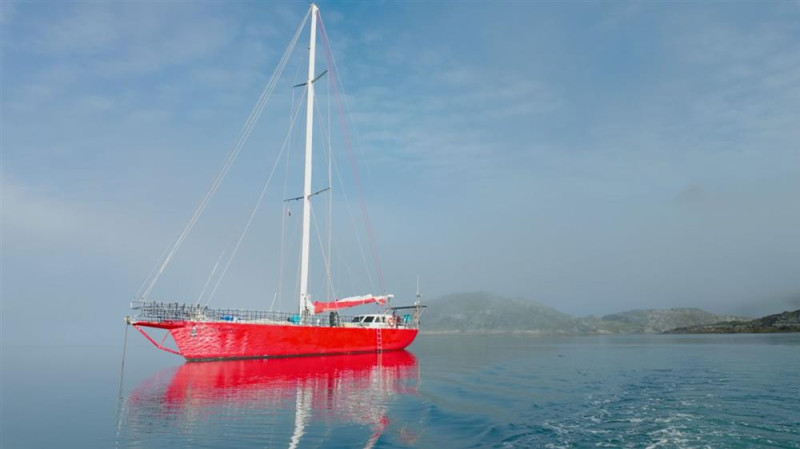
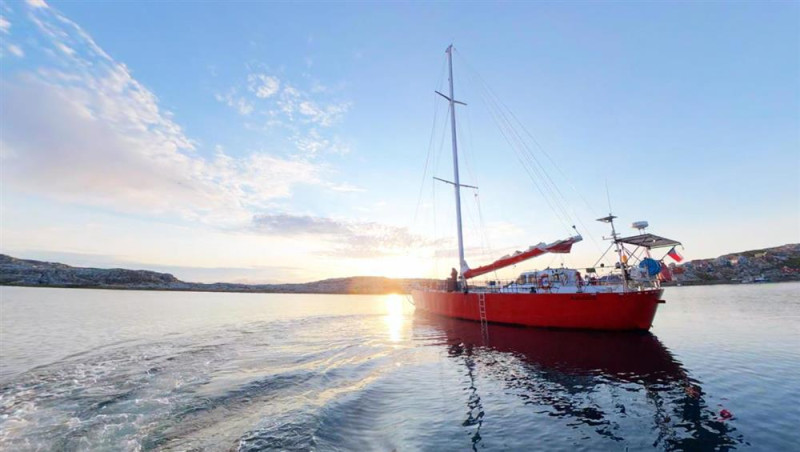
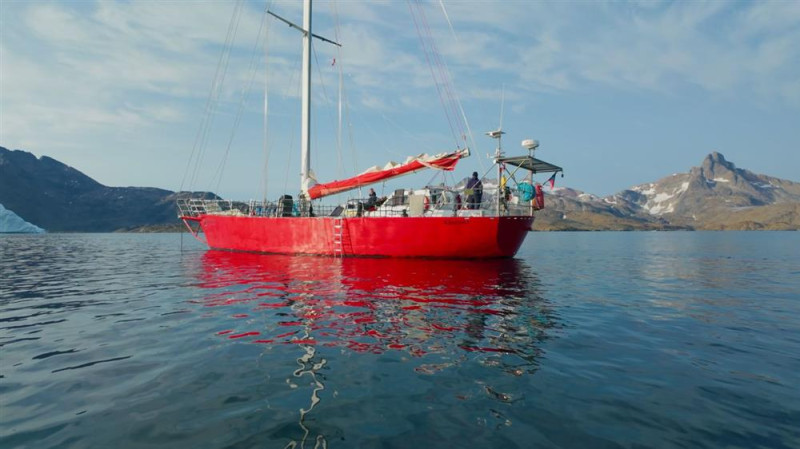
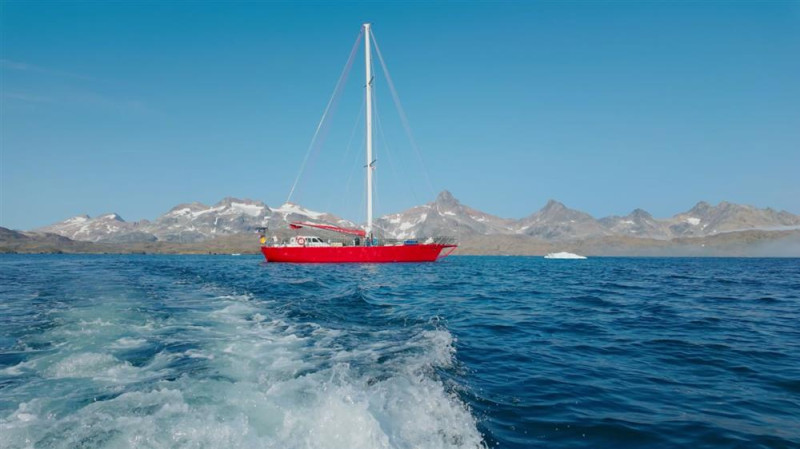
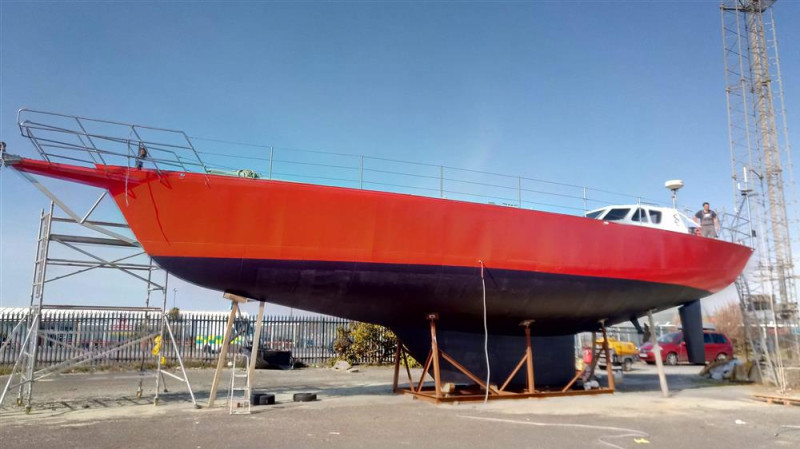
Global Surveyor is a fully certified Ocean Going Steel Constructed Charter Vessel. The Aleutian 70 was designed to sail safely, comfortably, and without worry to all parts of the globe She is very strongly built, which gives a tremendous feeling of security and confidence. The size, displacement, and design give masses of room aboard, and a steady comfortable motion. She can make fast passages and requires only a modest effort to sail. This is a pleasure cruise, and while the vessel will be sailed to a high standard of seamanship, there will be the minimum of shouting, rushing about, and being soaked by icy waters.
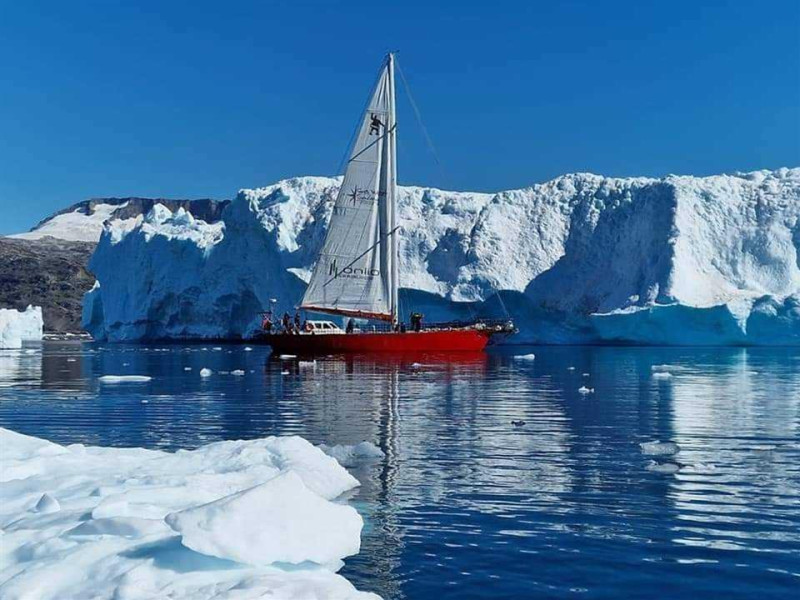
This is boat for someone who wants to go extreme latitudes in ice or North West passage with enough bunks to do it commercial and that's hard to find.
Currently category 0 commercial registration under EU Czech Flag with 4 years remaining (recoded 2025)
Designer Gunter Marine
Built by Graham Lacelles on Isle of White and design approved by MCA for category 0
Constuction and Design
Design
Global Surveyor was designed in conjunction with a naval architect, and built with the help of two welders. It was constructed from 20 tonnes of steel piece parts. All were cut to +- 1mm which ensured easy, quick, accurate and trouble free construction to a high standard.
For a safe, comfortable and fast passage maker, with the ability to routinely and with peace of mind sail to all parts of the globe from the tropics to the edge of pack ice.
Capable of being easily sailed by a crew of two, while having berths for a potential twelve..
To have four equal status double cabins for possible charter.
To have an excellent load carrying capability (5 tonnes) to enable the mounting of diving and scientific expeditions.
Without any compromise to safety, to produce a vessel that is easy and economical both to build and run.
To produce a vessel with its own distinct ethos. Something that equates to a ‘working vessel’, a ‘little ship’ that can earn its keep, rather than just another pleasure yacht.
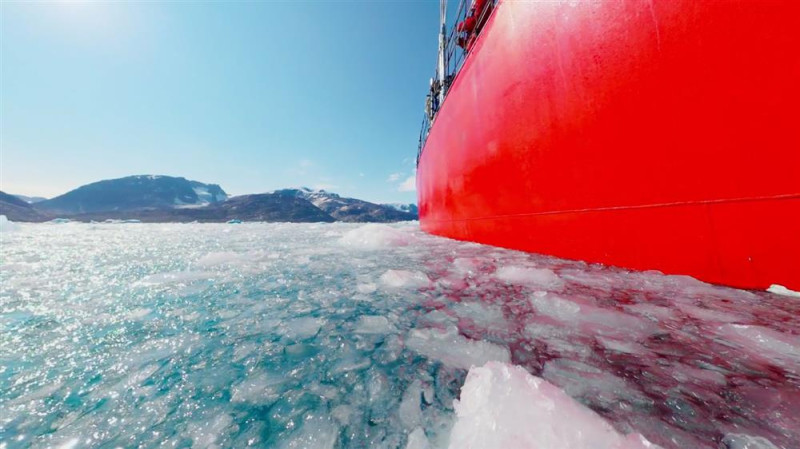
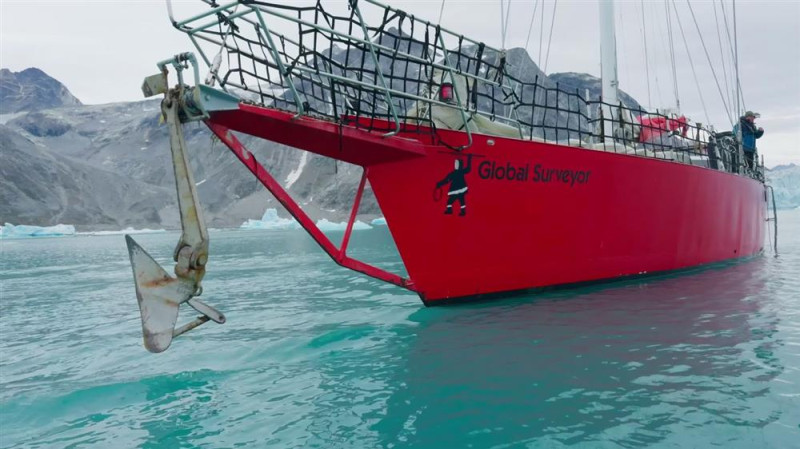
She has Water tight bulkheads x 7 Reinforced bow for working through ice, designed to withstand collision with iceberg or container.
Yacht comes with all original plans and drawings.
Length over deck. 19.95m
Safety, Comfort, and speed, generally increase with size. 20m was chosen as the largest that could be easily handled by a crew of two while providing enough room t o sleep a possible 14 and provides exceptional comfort with lesser numbers.
The deck length was kept just below 20m to minimise possible regulatory impacts.
Length Water Line. 17.71m.
Maximised to increase internal space, reduce the entry and exit angle of the hull and to give the greatest sailing speed.
Beam Over all. 5.00m
A moderate beam is utilised to reduce resistance especially to windward and minimise the broaching tendencies of wider hulls. ( Coincidentally 5m is also the maximum that is generally road transportable in the UK ) The waterline beam is maximised to give good initial stability and load carrying without increasing deck weight. This also gives a massive amount of usable room down to sole level in the accommodation.
Draft. 2.85m
Is sufficient to give a good sailing performance without being unduly deep. The wide keel gives high structural strength and allows the ballast, water and fuel to be carried low. The sump of the engine also fits into the keel. This in turn means a low and continuous sole level throughout the accommodation. The overall effect is to lower the centre of gravity thereby increasing the vessel’s stability both initial and ultimate.
Freeboard.1.75m Fwd 1.45m Aft
A fully flush deck was chosen for its inherent strength, simplicity and the gift of maximum useable deck space.
Deck
The windage of the hull and height of the centre of gravity of the deck, mast and rigging, together with the heeling moment of the sails all increase with an increase of freeboard. The low height of the cabin sole allows a moderate to low freeboard to be maintained while still keeping a general 2m (6’06’) of headroom in the accommodation.
A straight sheer amidships increases the longitudinal strength of the hull and maintains headroom throughout the accommodation. The camber of the deck and bulwark height give sheer to the profile.
Hull Construction
Radiused chine construction was chosen to give the sea keeping characteristics of round bilge while being economical to build. The Design Water Line is set at a displacement of 52 tonnes thereby including near maximum stores, crew and water, together with a large quantity of personal equipment. Many other vessels are designed to an unrealistic light displacement and spend most of their time overloaded, with a consequent loss of, safety and performance.
Rudder
The rudder is larger than normal to give better balance under sail and the directional stability of a long keel. A spade rudder was chosen so as to reduce steering loads by being fully balanced and to give a smaller turning circle ahead, and better control at low speeds and when going astern. The rudder is hung on a high strength 12 mm thick steel stock 193.7 mm diameter which provides greater strength than most skegs.
Rudder is 400kg with 22cm! shaft and designed to withstand anything and was designed to be used as extra 400l fuel
Rudder bearing replaced 2025
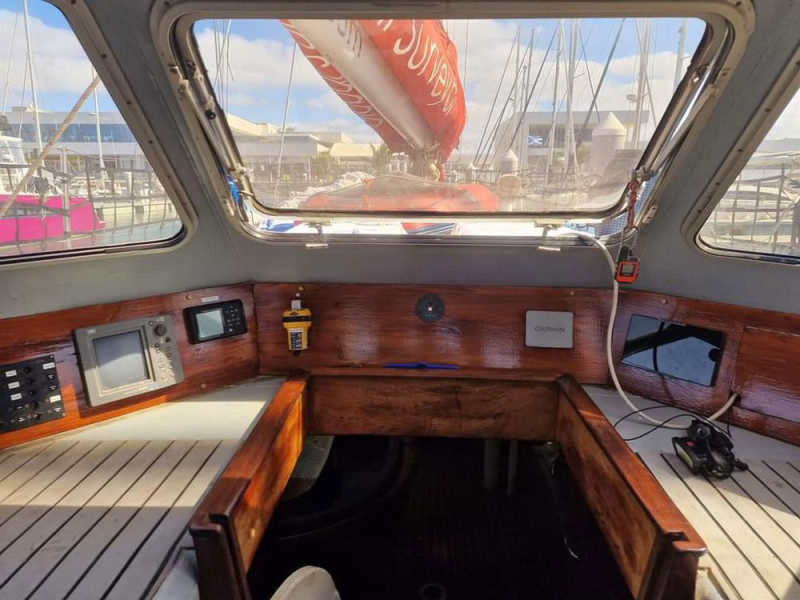
Wheelhouse / protected cockpit
It is not pleasant to char boil under a tropical sun or be deluged by freezing spray in the North Sea. A wheelhouse is therefore vital both for morale and safety. The dimensions required to give headroom and visibility are fixed by the human form, the wheelhouse could easily have turned into a box. It is suggested that this vessel has an exceptionally nice looking wheelhouse.
Depending on personal preference all the Navigation and engine instruments, radar etc are within the Wheelhouse, close at hand for the helmsman.
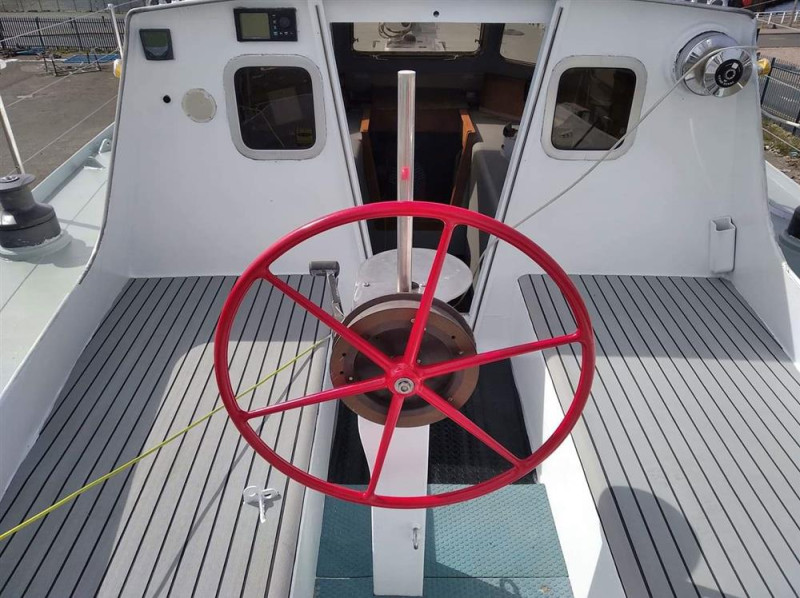
An inside wheel is not thought necessary as a dodge control could easily be fitted to the autopilot. The position of the wheel at the front end of the open cockpit allows the helmsman maximum uninterrupted vision, keeps him clear of the winch men and gives him maximum shelter.
The relatively high binnacle and moderate diameter wheel means that crew can easily slide alongside the wheel while the helmsman has the choice of steering from inside the shelter, standing behind the wheel, or sitting alongside. When berthing a step raises the helmsman’s eye level for even better visibility.
Anchor
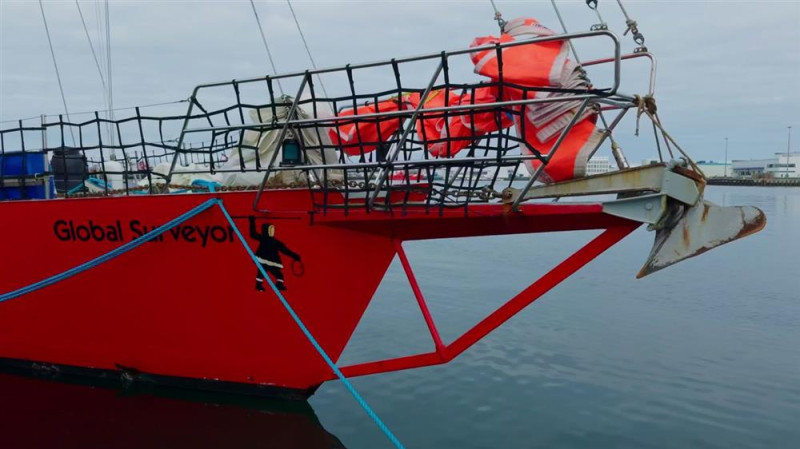
150kg genuine CQR. Self-launching and recovery on 80m of 16mm chain.400kg of main chain plus 150kg main anchor. Never need to re-anchor, stayed before De Punta Arenas in 70kn of wind and 12nm fetch at anchor for 3 days.
Bowsprit
Is strong enough to stand vessel vertically on end. Angled lower part to prevent pounding. Increases sail area with a shorter mast. Increases directional stability. Good place to set the cruising chute. Excellent place for the anchor and keeps the chain clear of topsides in wind over tide situation. The enclosed leads are strong enough to shackle moorings eliminating chafe. Best place to watch the dolphins and put the world to rights.
Forepeak
A fully watertight collision bulkhead to the accommodation is the second line of defence against semi-submerged containers. (the first is 7mm steel plating) Place to stow all the ropes, sails fenders, inflatables and anything else that might be damp, separate from the accommodation. Position for echo-sounder transducer, giving 5m warning of shallow water.
Capstan
Set well aft to lead the 450kgs of Chain into the forepart of the keel where it is nearer the centre of the vessel for better motion, and low down for stability. As well as controlling the anchor it can be used for adjusting moorings (has pulled the vessel across 200′ of mud), and hoisting sails.
Deck
The large uncluttered area gives a huge space for relaxing and working the vessel. The deck can also be used to collect drinking water at the rate of 600 litres for every 10mm of rain.
The Advantages of CAD Design Pieces
The hours already spent on the computer, equate to hours saved in construction.
It is easy, at the computer stage, to modify various aspects within the basic hull form. For instance, superstructure, cockpit position/size, bulkhead number/position, may be varied to personal requirements.
Once the design has been fixed and ‘proved’ all future kits of parts are easily repeatable.
There is no lofting, transferring of paper plans and cutting. Each operation takes a significant time and carries its own chance of error.
Cutting steel by any means costs money.
The steel is shot blasted and primed. It is submerged plasma cut to prevent distortion and is accurate to +- 1mm. It forms one truck load and is delivered ready for fabrication.
Because the parts are pre-shaped, have built in slots, tabs and locating cuts, construction is easy, foolproof and accurate and can be done by anyone with the necessary welding skills.
The approximate halving of construction time means that it is economic to employ sub-contractors or a shipyard if required, Even for a self builder ‘time is money’
The speed of build also minimises corrosion problems and may obviate the need to shot blast on completion.
At the end of the day, the difference in original cost of a kit of parts, against bare steel parts will represent a very small percentage of the overall investment. The market value of the vessel when sold however will largely depend on the integrity and finish of the hull.
Thickness of the steel is
5 to 6mm on deck
4 pilot house
6 above water line
7 below water line
10 side sections of keel (in keel is diesel tank so any rupture would at worst contaminate diesel but not ingress of water to boat)
25mm bottom plate
80mm front section of the keel
Keel designed for grounding
2.5cm panzer plate at bottom and massively reinforced at front
Excellent Ultrasonic Survey from 2021
Survey from 2023
Mechanical
Engine
Ford Mermaid Marina six cylinder naturally aspirated 130 HP. diesel fitted with a 2.91:1 reduction gearbox and a thirty inch self pitching propeller has been chosen to give economic and reliable propulsion.
The horizontal shaft line and propeller position in clear water promotes good propulsive efficiency and together with the rudder, excellent manoeuvnring both ahead and astern.
The self pitching propeller maintains good efficiency over a range of conditions from motor sailing, using minimum power with a high pitch, to plugging against a full gale utilising full power and low pitch. Propeller is folding replaced 2 years ago at a £7k.
Feathering will give minimum drag while sailing.
It is possible for just about any propeller to be fouled by flotsam. The distance between the rudder and propeller minimises the possibility of simultaneously jamming the rudder.
When operating in ice a cage will be temporarily welded around the propeller. ( another advantage of steel )
Engine to propeller shaft bearing replaced 3 years ago. Its sea water lubricated one, no need for grease.
Engine overhauled in 2024 new piston rings, oil pump, water pump, head gasket, new oil cooler.
Fuel consumption 6l per hour gives 6kn
Max speed under sail 11kn Cruising speed 7 to 8
Electricals
To minimise voltage drop and increase reliability a 24 Volt system for engine starting, pumps, navigation and domestic lighting.
150 AH 24 V. Lead Acid. For Engine starting and the Windlass.
150 AH 24 V. Ni Cads. For Domestic, Pumps and all Lighting. 40 AH 12 V. Lead Acid. Situated at high level “surge protected” for Navigation equipment radio transmitters and Emergency lighting.
Charging to any battery set using “smart” charging system from;
50 Amp 24V Main Engine Alternator. 50 Amp 24V Auxiliary Diesel, capable of being hand started.
Solar Panels 600W
220V connections in saloon and skippers cabin
Water system and Tankage
There are two fuel tanks, capacity 2,100 litres (460 gallons) giving a cruising range of approximately 1800 miles.
The three independent water tanks have a total capacity of 2,200 litres (483 gallons) and give at least 500 man days of drinking water. arrangement is designed to minimise free surface, to maintain fluids at the lowest CG. and to minimise changes of trim during use.
Deck drains can be diverted into the water tanks giving a potential 800 litres per cm of rain. (450 gallons per inch)
The rudder can also be used as an additional fuel tank, capacity 170 litres.(40 gallons)
Holding Tank with a capacity of 300 litres
Decks designed to collect water in rain to water tank.
Bilge Pumps
3 electric bilge pumps
1 x steering/rudder compartment (its separated from rest of the vessel by water tight wall soo no risk to sunk if rudder shaft seal failure or unlikely event of loss of rudder)
1 x for engine compartment under saloon floor
1 x for middle section and forepeak cabin
1 x manual pump that can be used in any compartment
1 x extra pump with electric cable and long hose that can be moved to any compartment (portable one) and connected to 2 electric dedicated supplies
Mast Rigging and Sails
Rig
Alloy Twin spreader mast head rig. Age of Standing rigging
Rig extremely oversized too, designed to survive capsize.
It was maintained and replaced gradually with yearly inspections by Clyde Rigging
Slab reefing Main with 2 reefs.
A cutter rig efficiently divides the total area into manageable sizes with good flexibility.
It allows the mast to be nearer to the maximum beam of the vessel giving the best staying angle, which increases the security of the whole rig by reducing the loads.
Bowsprit
Is strong enough to stand vessel vertically on end. Angled lower part to prevent pounding. Increases sail area with a shorter mast. Increases directional stability. Good place to set the cruising chute. Excellent place for the anchor and keeps the chain clear of topsides in wind over tide situation. The enclosed leads are strong enough to shackle moorings eliminating chafe. Best place to watch the dolphins and put the world to rights.
Sails
1 x Jib
2 x Stay sail (1 from 2024)
2 x Main sail (1 from 2021)
1 x Storm jib
1 x Tri-sail
Sails will be repaired and serviced prior to the sail at sellers expense
Accommodation
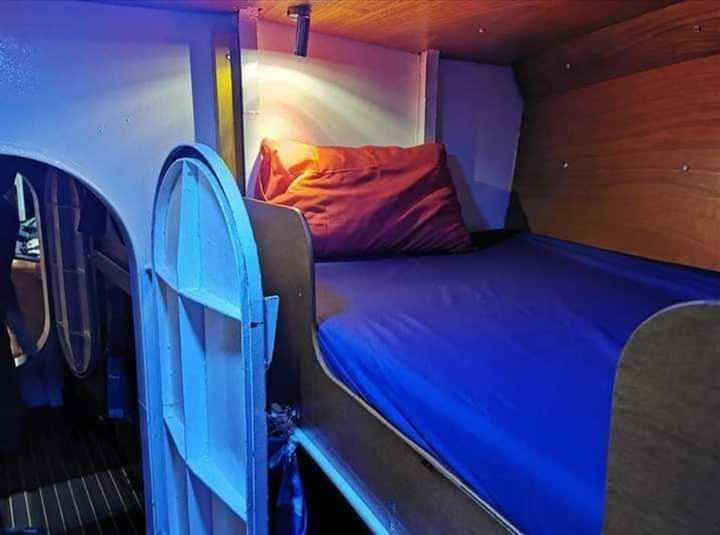
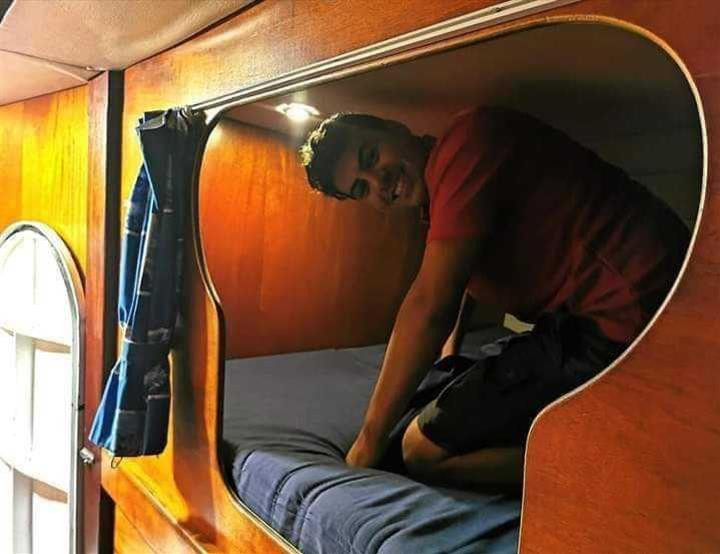
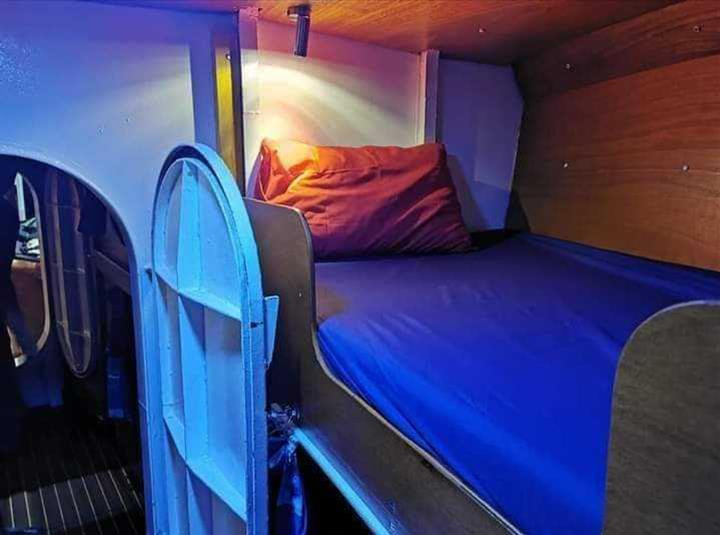
Fixed berths for 12 persons. All berths are very large and secure with 6′ foam mattresses.
The saloon is 5.6m long giving room for 20+ to enjoy cocktails. All the major weights are contained low down within this central section; namely 14 tonnes lead, 4 ½ tonne of fuel and water, and 1 tonne of engine. There are 5 transverse and one longitudinal watertight bulkhead.
There is only one seawater inlet, which feeds the engine and loos. The first valve is 150mm above the waterline on a 10mm wall thickness steel standpipe.
The water filter is instantly visible and can be quickly cleared if blocked.
Domestic discharges all go into a 300litre-holding tank, which can be pumped overboard through an above water fitting.
The large centre steel hatch not only allows direct removal of the main engine but can also be left open in following winds of less than force 6 to give a massive amount of light and ventilation into the accommodation.
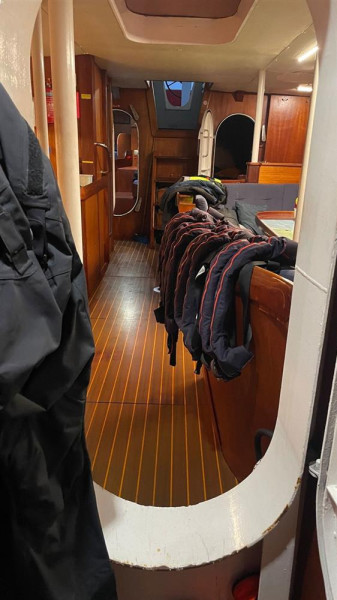
The accommodation is designed to make the absolute maximum use of space within the vessel while avoiding an ‘overcrowded’ look. The engine is completely contained beneath sole level allowing a constant floor level throughout.
Forepeak. Length 4m (13′) Stowage of sails, inflatable dinghy, fenders, ropes etc. Large steel deck access hatch.
Watertight Bulkhead.
Crew Cabin or Workshop. Length 2m (6’06’) Can be fitted out to hold up to four crew or to provide a workshop depending on requirements. ocean hatch for light, escape and ventilation.
Watertight bulkhead with Watertight door.
Central corridor with ocean hatch, doors to forward guest cabins
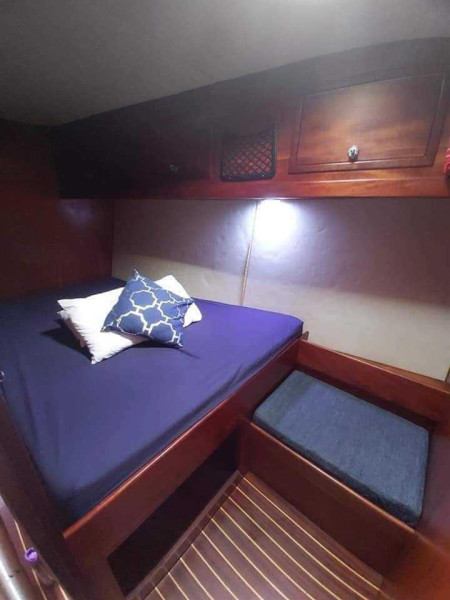
2 X Guest Cabins. Length 2.8m (9’01’) Each fitted with either two bunks or a double berth and occasional pipe cot. Deck light and dorade ventilator.
Watertight bulkhead with Watertight door.
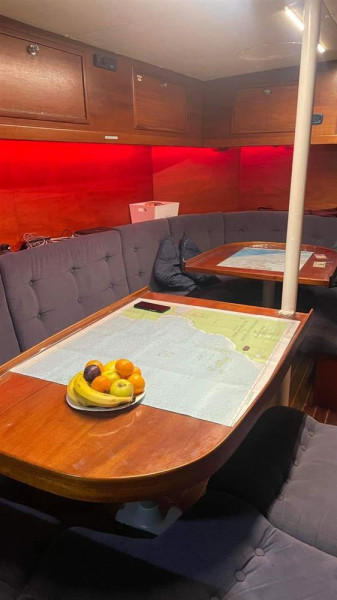
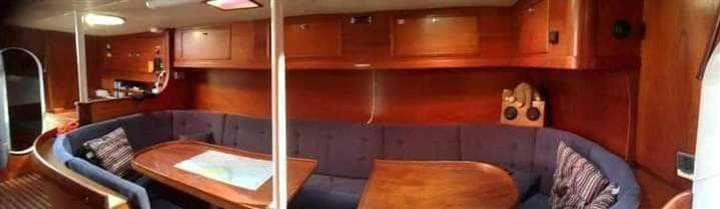
Main Saloon Area. Length 5.6m (18’02’) The saloon was kept as large as possible to give the visual impact of space and to be the main below deck working/relaxing area. At the same time the furniture is arranged to divide up this space below waist height, which together with hand holds provides maximum crew security in heavy weather.
Large saloon and saloon table, sits comfortably up to 14 people.
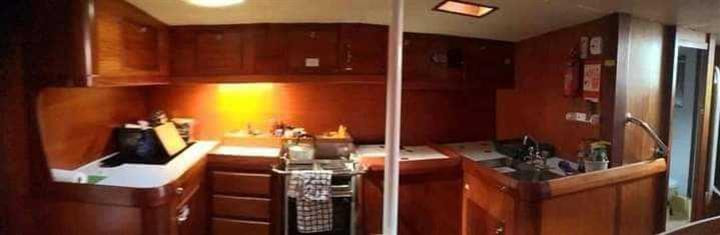
On the Starboard side is a large Galley fitted with a crash bar to provide a secure working environment in heavy weather. The cooker is positioned fwd to prevent the crew being thrown against it and is fitted with high fiddles. Extra large fridge with new unit fited 2021 Extra large cool box, can be easy turned in extra fridge.
Toilet/Shower compartments are situated Forward and aft of this to provide for the two separate accommodation areas. There is also a wet locker.
Only 2 sea cocks (small ones to flush toilet), rest of water intakes are through standing pipe with 1cm thick walls going above sea level (like on icebrakers) 1 x manual toilet 1 x electric toilet.
New boiler for hot water
On The Port side is the main seating area. The Settee is U shaped to allow comfortable use on either tack, and the table is split to allow easy access.
Aft’ is the Navigation/office space. According to preference most of the active navigation will be conducted in the wheel house but this area provides a quiet office space for tactical planning, and working on ship and other business. With the shelter provided by the wheelhouse it can be safely equipped with Computers, fax and communications equipment.
Dorade ventilator, Deck lights, Ocean Hatches, and a large engine deck hatch, provides ventilation, light and escape routes, together with the easy removal of the engine. There is access through the floor to the engine, and services together with under floor storage. A ladder provides access to the wheelhouse.
Watertight bulkhead with 2 X Wt doors to after cabins which are separated by a longitudinal bulkhead.
2 X Aft Guest Cabins Length. 3.2m (10’05’) fitted with double berths. fitted with ventilators and a clear hatch into wheelhouse for escape and light.
Rear twins with Watertight bulkhead.
After Peak. Length. 2.4m (7’09’) Containing Steering gear, generating set, and bosun/engineering store for fluids. Access through steel deck hatch.
Each individual berth including the mid line of double berths are fitted with lee clothes for use at sea. There is massive stowage space ( 5 cubic meters. 170 cu ft ) beneath the cabin sole alone.
Good ventilation is provided throughout and escape to deck is possible from all watertight compartment
3x Heaters (2 x Webasto New 2025, 1 x Planar)
Inventory
Electronics
Garmin GNX20 log, speed and depth
Garmin GM120 Wind speed and direction
Garmin GPSMAP 1022
JRC radar
Autopilot Brand new Garmin Autopilot fitted 2024 with internal and external display/control Boat can be steered by autopilot from pilot house.
Icom VHF
Icom MA500TR AIS
Rescue Me Ocean Signal EPIRB
Starlink sat communication and Iridium as back up.
Mooring and Anchoring
Main Anchor 150kg CQR anchor and 80m 400kg at 15mm chain has been chosen to provide the main ground tackle.
Kedge is 72kg Fortress
The main anchor is housed on the bowsprit giving the best lead for secure anchoring. The kedge is stowed at the stern and drops over a stern roller.
The electric windlass is situated well aft where its warping capstan can additionally be used for the control of head, spring and stern mooring lines, recovery of the stern anchor and the hoisting of sails. It also allows the 400 Kgs of chain to be stowed within the keel lowering the CG and keeping the weight amidships.
10 Fenders
Warps
Boathook
Safety
Gas Detector
Searchlight
Horn
Danboay
Lifering
10 x life jacket Ocean Safety (Ocean with sprayhood s)
Man overboard recovery
8 Fire Extinguishers
Fire Blanket
Bilge Pumps
General
Mariner 9.9 new 2024 outboard
Suzuki 4 new 2022
Waveline 3.5m dinghy
Clock and Barometer
Spares
Many extra spares onboard for remote adventures
3 x spare alternator
1 x spare startér motor
1 x spare gear box
1 x spare diesel heater
Tons of spare parts and tools
Notes form the Current and First owners
First Owner and Builder.
The First owner has had a lifetime of worldwide seagoing experience including 14 years in the Merchant Navy, typically on 30,000 tonne cargo liners and tankers. As a Marine Consultant concerned with oil spill control, having direct authority over fleets of Naval and Commercial vessels on manoeuvres. He has also direct handling experience with many types of vessels including Rig supply vessels, tugs, hovercraft, fast patrol craft and sailing vessels. He obtained a Masters Certificate Foreign Going certificate in the MN, and now holds a commercial RYA Yacht master Ocean certificate. At least one other experienced yachtsman will also be aboard..
Details of his time building Global Surveyor can be found in is book https://www.amazon.co.uk/All-I-Ask-Tall-Ship-ebook/dp/B007QK97SS
Second Owners Comments
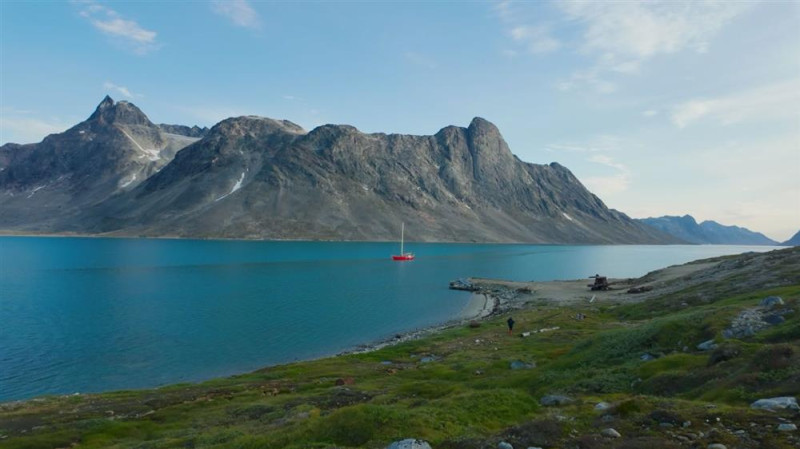
Used over last 6 years on 15 expeditions to Greenland and 8 to Antarctica and 2 to Jan Mayen
Extremely well insulated for extremel conditions.
Tested in hurricane conditions and on many crossings of famous Drake Passage
Hull and deck will be repainted prior to the sale
Can be delivered worldwide at cost
Sunbird International

The Harbour
KA22 8BB Clyde Marina
United Kingdom
https://www.sunbirdyachts.eu
Andrea Martin-Wright
Telefon: 01294607074